Ringed seal facts
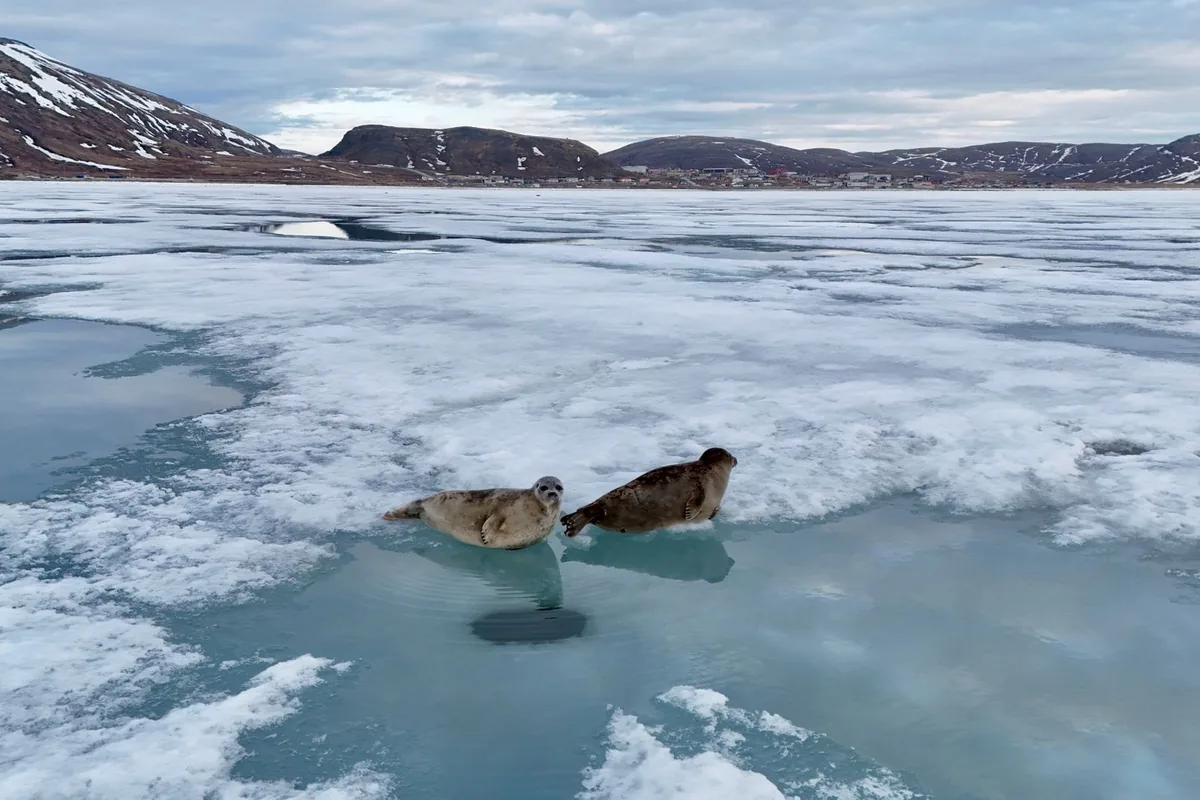
The ringed seal is the smallest and most abundant seal species inhabiting Arctic waters. Named for the distinctive ring-like markings that pattern its fur, this marine mammal has evolved remarkable adaptations to thrive in one of Earth's most extreme environments. The species occupies a central position in Arctic food webs as the primary prey of polar bears, making it a keystone species for understanding predator-prey dynamics in the region.
Ringed seals possess exceptional ice-adaptation capabilities that enable survival in the frozen Arctic sea. Rather than migrate seasonally, they maintain breathing holes in the ice by continuously using their powerful claws to keep channels open throughout winter. This behavior allows the seals to access air while remaining beneath or near the ice surface. Additionally, pregnant females excavate snow lairs above their breathing holes, creating insulated chambers in which they give birth and nurse their pups away from surface threats.
The ringed seal's dependence on stable sea ice distinguishes it from many other Arctic marine mammals, including the narwhal. While narwhals are deep-diving cetaceans capable of sustained underwater foraging, ringed seals maintain closer ties to the ice interface, returning frequently to their maintained holes. This ice-dependent lifestyle makes the ringed seal one of the most specialized ice-adapted mammals in the Arctic, a specialization that defines both its ecological role and its vulnerability to environmental change in polar regions.
Sources: NOAA Fisheries — Ringed Seal; IUCN Red List — Ringed Seal (Pusa hispida). Educational information only. See our sources & fact-check policy.
Frequently asked questions
How big is the ringed seal?
The ringed seal grows to about about 1–1.5 m and can weigh up to ~70 kg.
What does the ringed seal eat?
Its diet is mainly small fish and crustaceans.
Where does the ringed seal live?
It is found in the arctic ocean, circumpolar.
Is the ringed seal endangered?
The IUCN Red List classifies the ringed seal as Least Concern. Its estimated population is millions (most abundant arctic seal).
More in Arctic wildlife
Compare the Arctic species
See size, weight, lifespan, diet, range, and conservation status side by side.
Compare Arctic species →