Narwhal facts
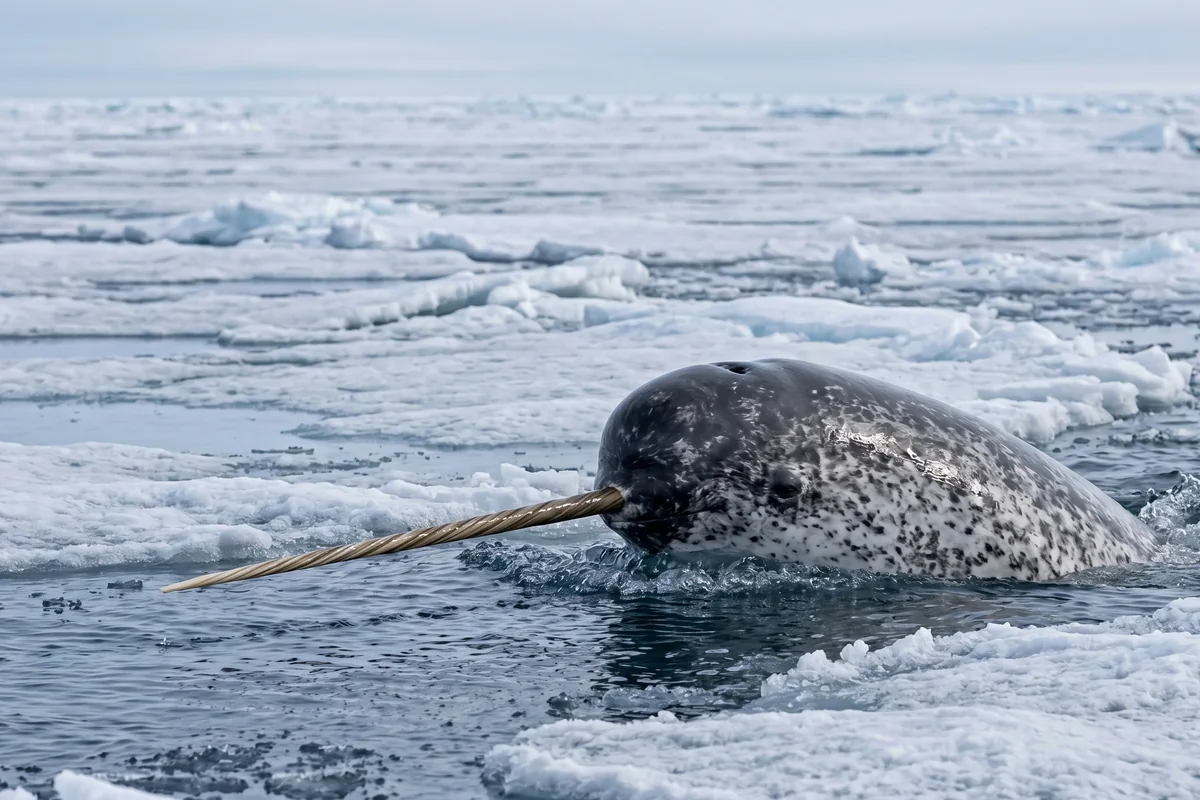
The narwhal (Monodon monoceros) is a medium-sized Arctic toothed whale distinguished by a remarkable physical feature. Most male narwhals develop a long, spiral tusk—actually an enlarged tooth that protrudes from the head. This distinctive feature has led to the animal's popular nickname, the "unicorn of the sea." The narwhal inhabits the high-Arctic pack ice, where it has evolved to thrive among floating ice sheets and frigid waters throughout the year.
Life in the extreme Arctic environment shapes the narwhal's behavior and physiology. The species is known for its capacity to dive to extreme depths in search of food, demonstrating remarkable adaptation to one of Earth's most challenging marine ecosystems. These deep dives allow narwhals to access prey in the cold, dark waters beneath the ice.
The narwhal's closest living relative is the beluga whale, a fellow Arctic cetacean. Both species share the Arctic as their primary habitat and display similar social structures and vocalizations. Understanding the narwhal requires recognizing it as both a specialized deep diver and an ice-dependent Arctic marine mammal whose survival is intimately linked to the unique conditions of high-latitude polar waters.
Sources: IUCN Red List — Narwhal (Monodon monoceros); NOAA Fisheries — Narwhal. Educational information only. See our sources & fact-check policy.
Frequently asked questions
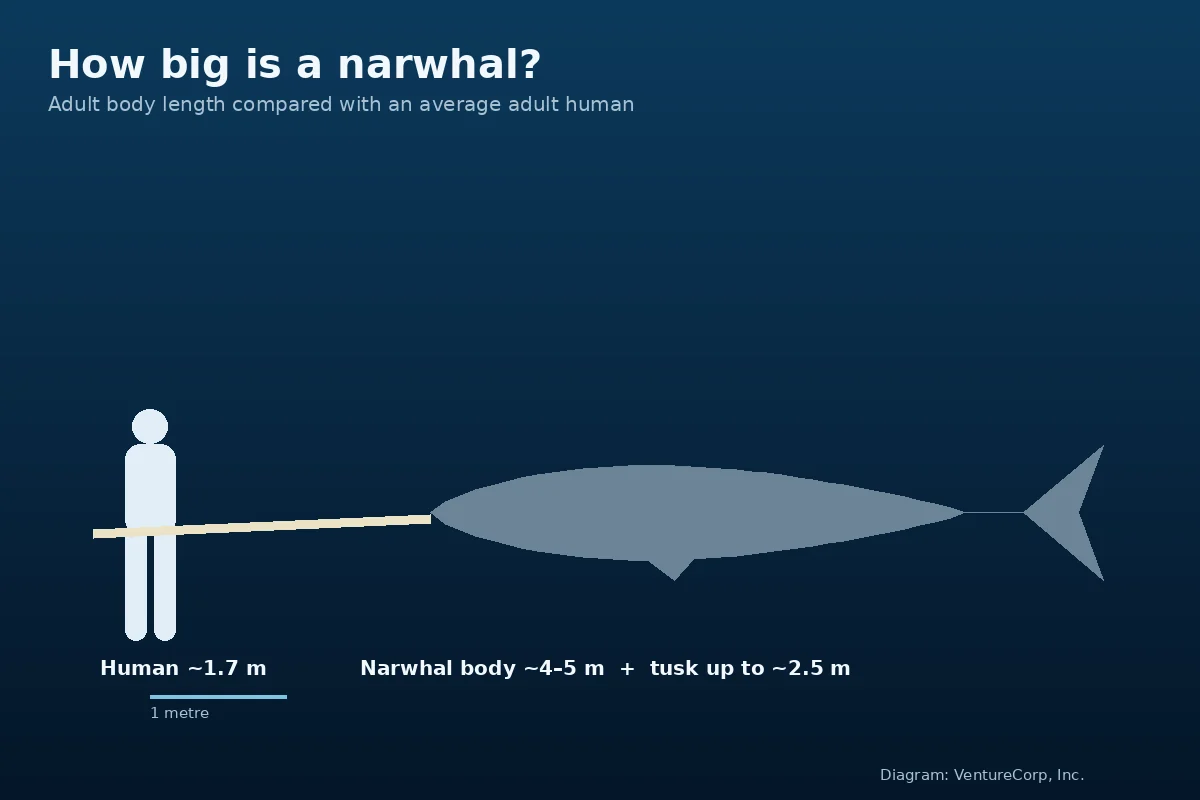
How big is the narwhal?
The narwhal grows to about about 4–4.5 m (excl. tusk) and can weigh up to ~1,600 kg.
What does the narwhal eat?
Its diet is mainly greenland halibut, arctic cod, squid.
Where does the narwhal live?
It is found in the high arctic — baffin bay, greenland, canadian arctic.
Is the narwhal endangered?
The IUCN Red List classifies the narwhal as Least Concern. Its estimated population is ~120,000+ mature.
More in Narwhal
Compare the Arctic species
See size, weight, lifespan, diet, range, and conservation status side by side.
Compare Arctic species →