Narwhal mating & breeding
See all narwhal pictures & images →
The male narwhal reaches sexual maturity at eight to nine years old, and the female narwhal reaches that stage of its life at four to seven years old.
Based on the data available the female narwhal is able to give to one calf once every three years. The narwhal gives birth after a 15-month gestation period.
The breeding time for a narwhal whale is in the spring, and it usually takes place in mid-April, with the calf being born in the July of the following year.
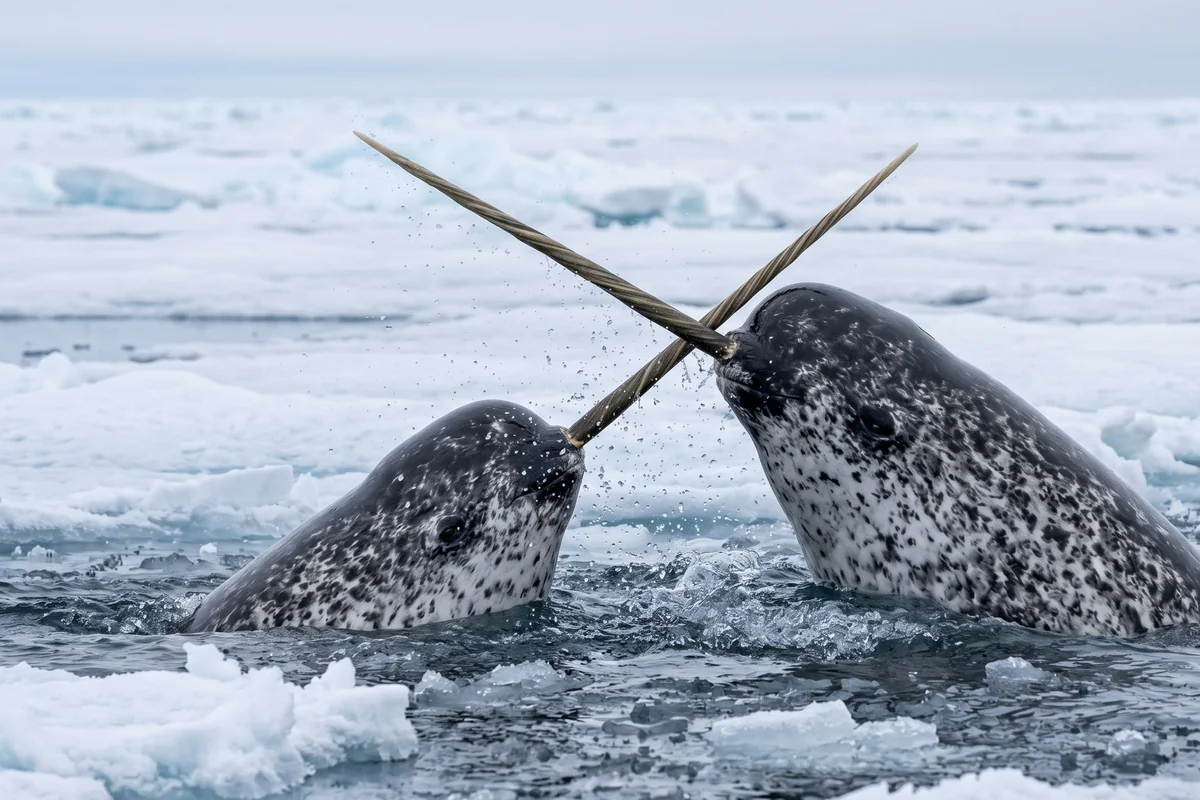
The narwhal tusk is thought to play a strong role in the mating activity of the whale. Narwhals have been seen with their tusks crossed. And the tusks have also been seen used as weapons when males battle over a female for the right to mate. Additionally the tusk is known to experience a growth-spurt at sexual maturity in males; this has been interpreted as suggesting that there is a possible breeding function tied into the narwhal tusk.
Updated & expanded — current sourced facts
The reference notes below were added by the Narwhal Whales editorial team to bring the original article up to date with current, sourced facts (IUCN Red List, NOAA Fisheries, NAMMCO). They supplement — and do not replace — the original article above.
Narwhals exhibit a breeding system adapted to Arctic conditions, with males and females reaching sexual maturity at different life stages. Males become sexually mature at approximately 8 to 9 years of age, while females mature earlier, typically between 4 and 7 years old. This staggered maturation may reflect distinct reproductive roles within the population.
Mating in narwhals is believed to occur during spring months, typically in offshore waters beneath the sea ice where breeding populations congregate. Following fertilization, females carry calves for approximately 14 to 16 months before giving birth. This extended gestation period means that calves are generally born the following summer, timing their arrival to align with seasonal conditions that may support early growth and development. Breeding is not an annual event for females; instead, individuals typically reproduce once every three years, a pattern consistent with the demands of gestation, nursing, and calf rearing in the Arctic environment.
The narwhal's elongated tusk appears to play a significant role in reproductive behavior and mate competition. Males have been observed engaging in gentle tusking interactions, crossing or rubbing tusks with one another in displays that do not appear aggressive or combative in nature. The tusk's size and growth correlate closely with male sexual maturity, suggesting that the structure functions primarily as a visual and tactile signal of fitness and reproductive status rather than as a weapon used in direct conflict. These behaviors indicate that tusk use in breeding is centered on social display and competitive signaling among males seeking access to mates.
This page updates and corrects an original narwhalwhales.com article with current, sourced facts.
Sources: NOAA Fisheries — Narwhal; IUCN Red List — Narwhal (Monodon monoceros). Educational information only. See our sources & fact-check policy.
Frequently asked questions
Male maturity of the narwhal mating & breeding?
About 8–9 years
Female maturity of the narwhal mating & breeding?
About 4–7 years
Mating season of the narwhal mating & breeding?
Spring, generally offshore under ice
More in Narwhal
Explore more Arctic wildlife
Compare the narwhal with the beluga, bowhead, orca, walrus, and polar bear in our quick-facts table.
Compare Arctic species →