Narwhal behavior & echolocation
See all narwhal pictures & images →
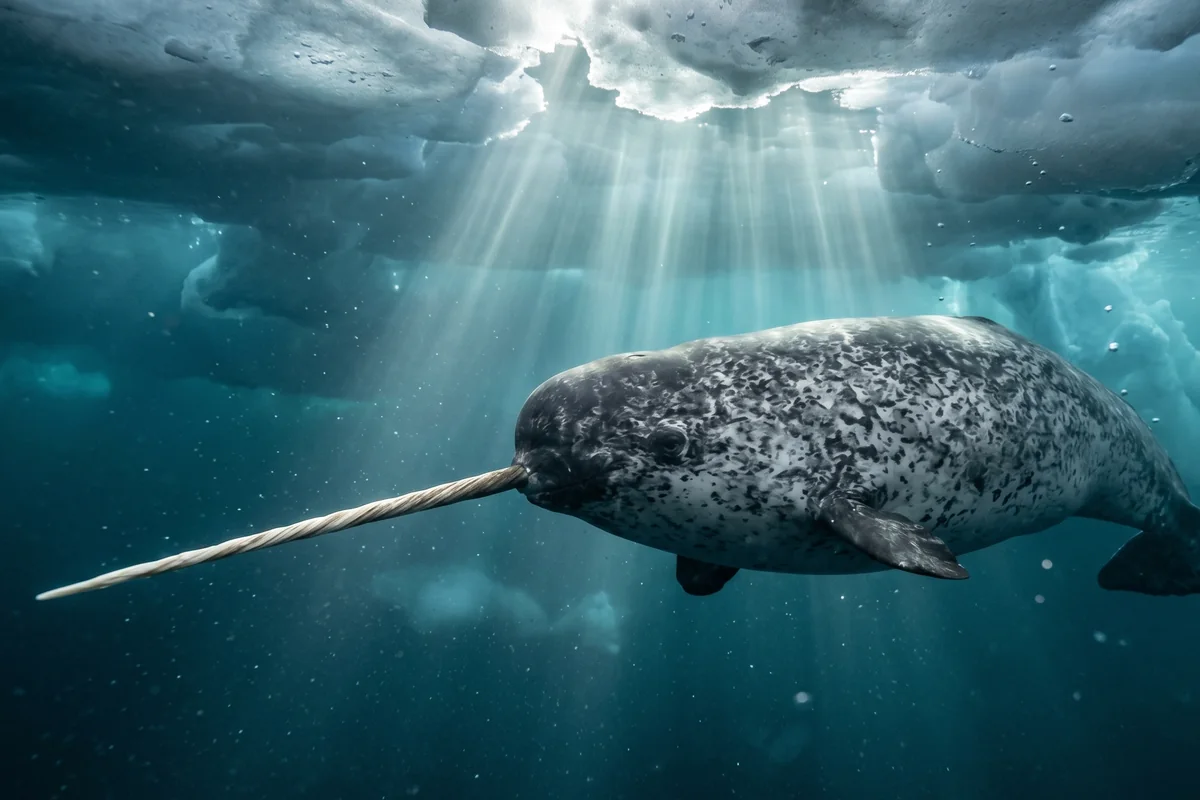
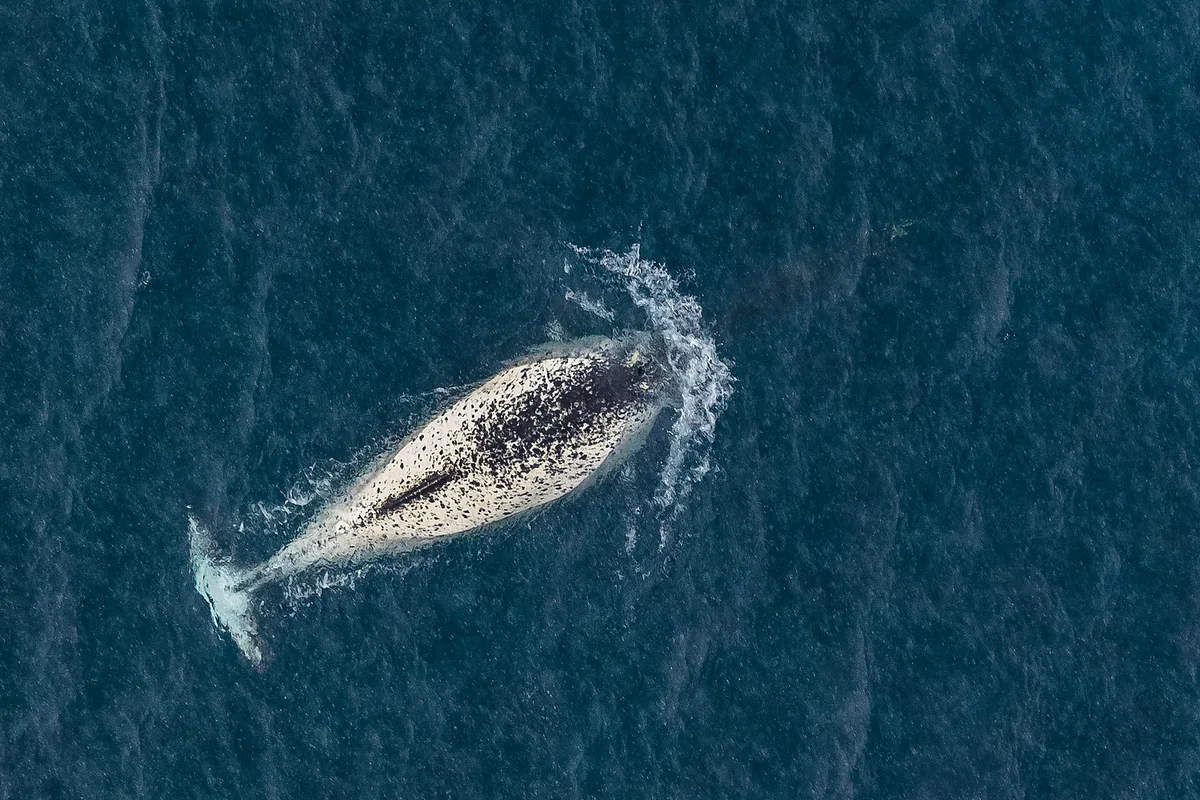
Narwhals are highly social Arctic cetaceans that spend much of their lives in groups, typically numbering from just a handful of individuals to a few dozen animals. During seasonal migrations, these groups converge into much larger aggregations, reflecting the species' cooperative nature and seasonal movement patterns across Arctic waters. This social structure allows narwhals to navigate, hunt, and survive collectively in one of Earth's most challenging marine environments.
Like other toothed whales, narwhals rely heavily on echolocation to orient themselves and locate prey in the dark, ice-covered waters of the Arctic. They produce clicking and buzzing sounds through the melon, a specialized acoustic organ located in their forehead, and interpret the returning echoes to build a detailed acoustic picture of their surroundings. In addition to these echolocation signals, narwhals communicate through whistles and various other vocalizations, creating a rich soundscape within their pods.
Narwhals are distinguished as among the deepest-diving marine mammals, undertaking repeated, prolonged dives to forage and explore their environment. Male narwhals also exhibit a distinctive behavior called tusking, in which individuals raise their long tusks at the surface and rub them together with other males—a behavior whose exact function remains a subject of ongoing study. These diving and social behaviors underscore the narwhal's remarkable adaptations to Arctic marine life.
Sources: NOAA Fisheries — Narwhal; IUCN Red List — Narwhal (Monodon monoceros). Educational information only. See our sources & fact-check policy.
Frequently asked questions
Group size of the narwhal behavior & echolocation?
A few to a few dozen; large migratory aggregations
Navigation of the narwhal behavior & echolocation?
Echolocation — clicks & buzzes via the melon
Sounds of the narwhal behavior & echolocation?
Clicks, buzzes, whistles
More in Narwhal
Explore more Arctic wildlife
Compare the narwhal with the beluga, bowhead, orca, walrus, and polar bear in our quick-facts table.
Compare Arctic species →