Narwhals & climate change
See all narwhal pictures & images →
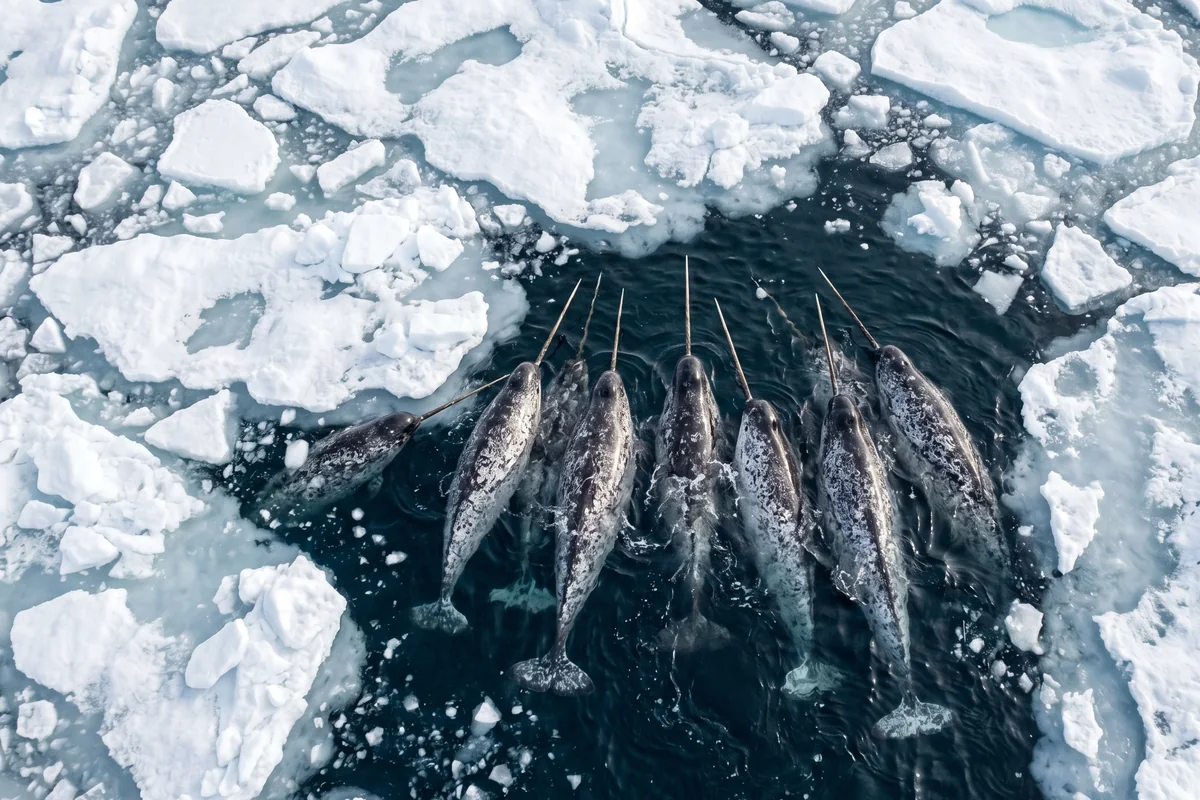
Narwhals are among the Arctic's most ice-dependent marine mammals, and their intimate relationship with sea ice makes them particularly vulnerable to rapid climate change. Unlike many cetaceans that have adapted to open water or seasonal ice, narwhals have evolved an entire life cycle built around stable Arctic pack ice. They use ice platforms for resting and socializing, navigate beneath it to forage, and rely on predictable seasonal patterns to find food and avoid predators. As climate warming causes sea ice to retreat farther north and persist for shorter periods, the conditions that narwhals depend on are being fundamentally altered.
The ecological cascades triggered by ice loss create multiple, overlapping threats. Killer whales, which historically were restricted to ice-free waters, now range into Arctic regions where they prey on narwhals with increasing frequency. Simultaneously, the opening of shipping lanes through newly ice-free waters introduces underwater noise that can disrupt narwhals' sensitive hearing and interfere with their echolocation and communication. Changes in ocean temperature and currents are also shifting the distribution of Arctic fish and squid populations that narwhals hunt, forcing them to expend more energy to locate food in unfamiliar areas.
Perhaps most immediately dangerous are entrapment events, in which narwhals become trapped when open water suddenly freezes over during unexpected weather shifts. These catastrophic freezing events can kill large numbers of individuals in a single location. Although narwhals currently maintain a conservation status of Least Concern at the global level, the combined pressure of these climate-driven changes underscores the critical importance of ongoing population-level monitoring to detect early warning signs of regional decline.
Sources: IUCN Red List — Narwhal (Monodon monoceros); NOAA Fisheries — Narwhal; NAMMCO — Narwhal. Educational information only. See our sources & fact-check policy.
Frequently asked questions
Why vulnerable of the narwhals & climate change?
Life is built around sea ice
Rising threat of the narwhals & climate change?
More orcas as ice retreats
Human pressure of the narwhals & climate change?
Ship traffic & underwater noise
More in Narwhal
Explore more Arctic wildlife
Compare the narwhal with the beluga, bowhead, orca, walrus, and polar bear in our quick-facts table.
Compare Arctic species →